Eco-Friendly Living: The Environmental Advantages of Salt-Free Water Softening
19th Dec 2025
We all love clean water in our homes. In many cases, we have to treat our water for it to be suitable for all kinds of daily uses and purposes. This process often involves additives like water softeners. In the end, we get clean, usable soft water—a win for us. But wouldn’t it be great if the way we treat hard water could help the planet, too?
If you care about clean taps, green living, and reducing water waste, switching to an eco-friendly, salt-free water softener might be one of the smartest choices you ever make. It is important for your home, your wallet, and the world. Essentially, with eco-friendly water softening, you can solve the problems of hard water without adding salt to the environment. To make the point more convincing, here are the environmental benefits of salt-free water softeners.
What Is a Water Softener and Why Do People Use It?
Have you ever noticed a white crust on your faucets and bathroom fixtures? Perhaps you end up with stiff towels after doing laundry. Is that just because of the soap? It could be, but you are likely also dealing with hard water.
What is hard water? Hard water contains extra minerals, like calcium and magnesium, floating around inside it. While they are not dangerous, they cause many annoying problems in everyday life.
A water softener or salt-free water conditioner helps fix that. You can think of it as giving your water a small "attitude adjustment."
- Salt-based softeners remove the hard minerals entirely.
- Salt-free systems like ours do not remove the minerals. Instead, they stop them from sticking to your pipes, showerheads, dishes, and appliances. Your water still feels clean and gentle without the buildup. This is one of the primary salt-free water softening advantages.
The Negative Impact of Salt-Based Softeners on Earth
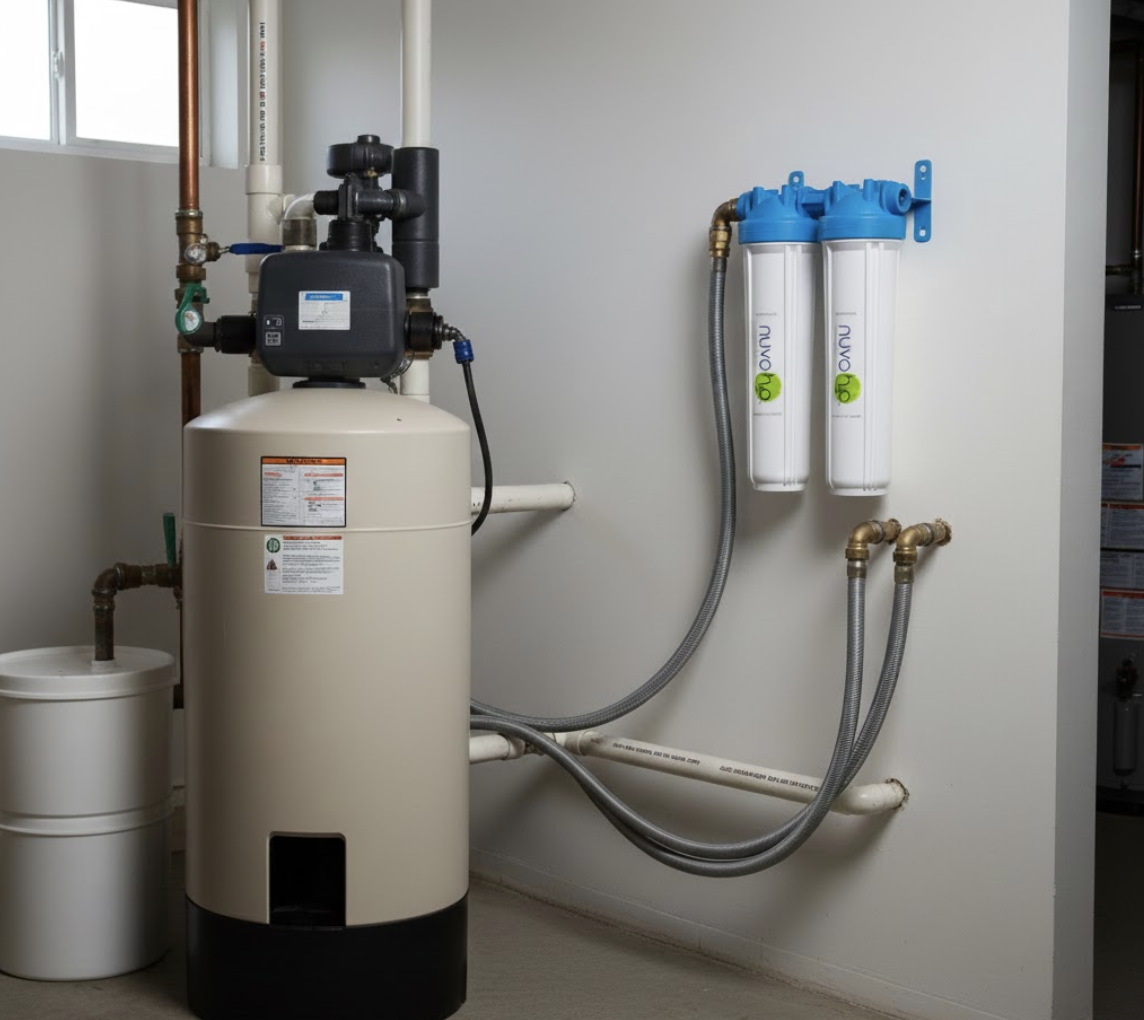
Most traditional water softeners use salt to soften hard water. This means every time the unit regenerates, it flushes salty, mineral-laden water (brine) into drains, sewers, or groundwater.
That salty discharge is hard on waterways. Salt raises chloride levels, which in turn messes up water chemistry. This is harmful to fish, plants, and soil. In fact, water softener salt is one of the top contributors to chloride pollution in many lakes and rivers.
Traditional softeners also use extra water and energy during regeneration. This is water that is simply flushed away; some systems waste almost 8,000 gallons per year. Consequently, the convenience of soft water comes with a hidden environmental bill: salt pollution, water waste, stressed wastewater treatment, and impacted ecosystems. That’s not the kind of tomorrow most of us hope for. This is why it is vital to understand the benefits of saltless water softeners.
Salt-Free Water Softening Advantages
Here is how going salt-free can solve the problems mentioned above. Let’s look at the benefits of eco-friendly water softening agents that are free from salts.
1. No Brine Discharge and Less Water Waste
Salt-free systems do not use salt or flush brine. Instead, they treat water to prevent scale and mineral buildup. Therefore, no salty wastewater enters the environment. This helps reduce chloride pollution, soil damage, and stress on freshwater ecosystems.
Moreover, because salt-free units do not regenerate the way salt-based ones do, you skip the regular water waste tied to regeneration cycles. This saves water and reduces the strain on the municipal water supply. This is a clear example of salt-free water softener conservation—it’s good for your bills and the planet.

2. Less Detergent and Cleaner Homes with Lower Environmental Impact
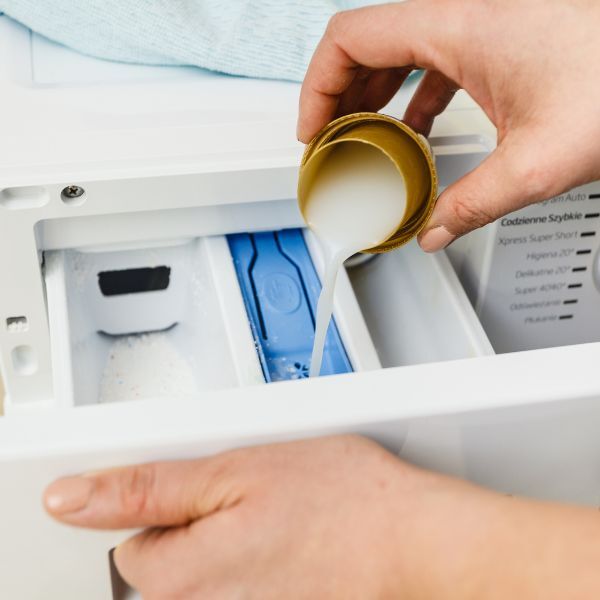
Hard water reacts poorly with soap. Because the soap does not lather properly, residue often stays on skin, fabrics, and dishes. As a result, you end up using more soap and detergent.
Softened water helps everything wash cleaner. Consequently, you use less detergent, less soap, and fewer products overall. That "eco-gain" is twofold: fewer plastic detergent bottles in landfills and fewer chemicals flushed into water systems. It is a great example of green water-softening technology.
3. Longer-Lasting Appliances and Energy Savings
Hard water causes scale on various fixtures and appliances. It can build up in heaters, pipes, and dishwashers, which reduces efficiency and increases energy consumption.
Salt-free water conditioning helps prevent that buildup. This means appliances and water heaters run better, use less energy, and last longer. Over time, this results in a reduced carbon footprint and lower expenses for your home.
4. Low-Maintenance Systems with Less Waste
Because salt-free softening skips salt and brine tanks, there is no hauling heavy salt bags, no messy brine, and no frequent maintenance. You can just "set it and forget it." That is one less chore and significantly less plastic or packaging waste from salt supplies. For someone seeking sustainable water treatment systems that are actually simple, this is a win.
NuvoH2O: Eco-Friendly Home Water Solutions
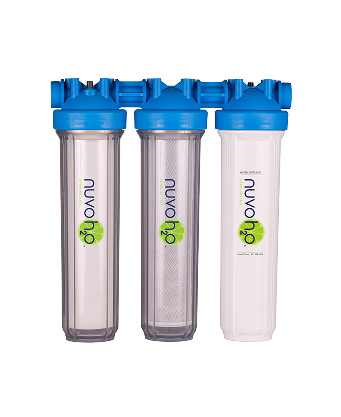
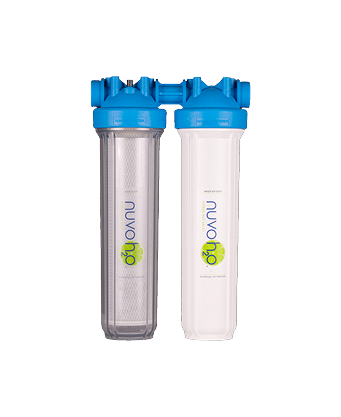
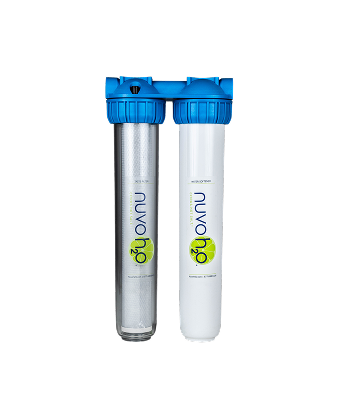
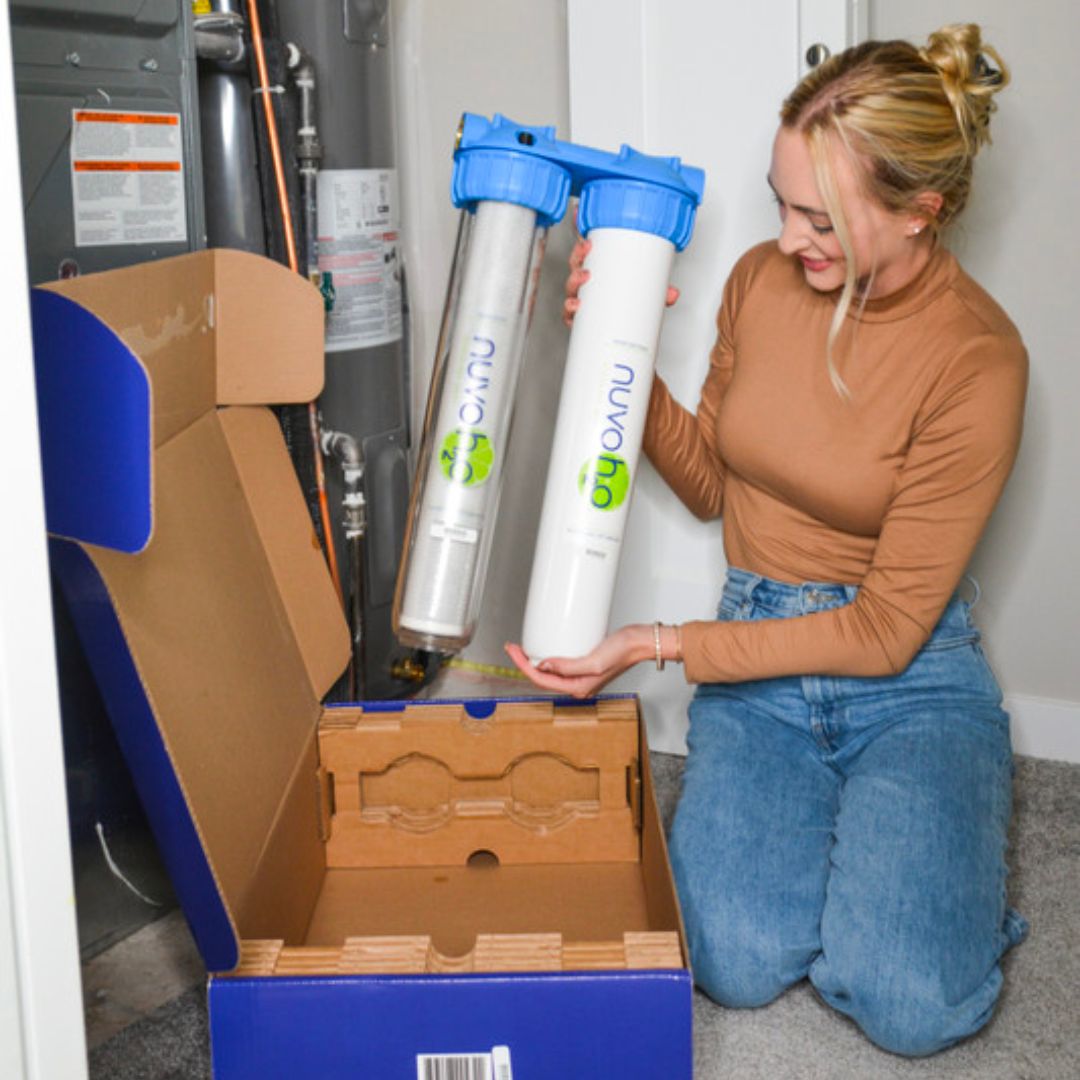
If you want water that is easier on your home and kinder to the planet, NuvoH2O’s salt-free softeners are built for that.
- No salt, no brine: No draining ecosystems when you shower.
- Clean water, fewer chores: No need for hauling salt bags or heavy maintenance.
- Balanced water: Plumbing protection and healthy water without stripping away all minerals.
- Lower energy and lower waste: Happier water heaters, less detergent, and fewer plastic bottles.
For families that care about a green, comfortable, and healthy home, it is a choice that feels right—for today and for tomorrow.
The Big Ripple Effect
Switching to salt-free water softening may not seem like a dramatic lifestyle overhaul, but it is a small, smart step for the future. It is a step that helps your water, your home, and the planet your children will inherit.
If you care about eco-friendly home water solutions, water conservation, and energy efficiency, it is time to rethink how "soft" water should really be.