Can Your Filter Remove PFAS? Microplastics & Forever Chemicals in Water
23rd Dec 2025
Key Takeaways
- PFAS (“forever chemicals”) are synthetic compounds that don’t break down and are found in tap water across the U.S.
- Not all filters remove them. Only specific systems (NSF/ANSI 53 or 58 certified, or advanced multi-stage filters) can significantly reduce PFAS.
- Reverse osmosis removes PFAS, but it also removes beneficial minerals and wastes water.
- Some pitcher filters work, but many do not.
- If you want a non-toxic water filter that targets PFAS, microplastics, bacteria, and forever chemicals while keeping essential minerals, systems like NuvoH20’s NuvoLuxe Pro offer a more advanced, balanced solution.
What Are PFAS (“Forever Chemicals”)?
PFAS are a group of more than 14,000 synthetic chemicals used in nonstick pans, food packaging, firefighting foam, waterproof clothing, and industrial manufacturing. They’re called “forever chemicals” because they don’t break down in the environment, and they accumulate in the body over a lifetime.
PFAS exposure has been linked to:
- Hormone disruption
- Immune effects
- Liver and thyroid issues
- Certain cancers
- Developmental concerns in infants and children
Because PFAS contamination is so widespread, millions of Americans now search for the best water filter for PFAS to protect their families.
Do Water Filters Remove PFAS?
Yes, but only some water filters remove PFAS.
Many standard filters, including common carbon pitchers, do not reliably reduce “forever chemicals” unless they use certified carbon block, ion exchange media, or reverse osmosis membranes.
Look for systems designed and tested for:
- PFAS reduction (NSF/ANSI 53)
- Reverse osmosis performance (NSF/ANSI 58)
- Sub-micron filtration for microplastics and nanoplastics
This is why people searching for pfas water filters need to look beyond basic fridge or pitcher filters.
How to Get Rid of Forever Chemicals in Your Water
If you’re looking for real solutions on how to get rid of forever chemicals, the truth is simple: only a few types of filtration can reliably reduce PFAS. Many standard filters (especially refrigerator filters, old pitchers, or basic carbon cartridges) won’t cut it.
Here’s what does work, and what to know before choosing the right system for your home.
1. Reverse Osmosis (RO)
RO has long been considered the gold standard for removing PFAS because it forces water through an ultra-tight membrane that blocks most contaminants, including many “forever chemicals.”
What to know:
- Very high PFAS reduction: RO membranes are rated to remove tiny particles, making them one of the most effective options for a PFAS water filter.
- But it also removes beneficial minerals: RO strips everything out, good and bad. That’s why RO water often tastes “flat” or slightly acidic unless it’s remineralized.
- It wastes water: Standard RO systems flush out about one gallon of wastewater for every gallon of filtered water, which can be a drawback for eco-conscious households.
- Great performance, but not always the best everyday fit: RO works, but it’s bulky, requires ongoing maintenance, and costs more to operate long-term.
2. Certified Carbon Block or Ion Exchange Filters
If you’re not interested in RO, the next most reliable option is a certified carbon block or ion exchange filter, especially those specifically tested for PFAS reduction.
Why these work: Carbon and ion exchange filters attract and trap PFAS molecules, but only when engineered for it. Generic carbon pitchers or fridge filters often aren’t dense enough to catch PFAS.
Things to keep in mind:
- Look for certification: NSF/ANSI 53 or 58 is the best way to confirm the filter has actually been tested for PFAS reduction.
- Quality matters: High-performing pitchers and under-sink filters use tightly packed carbon blocks, not loose granules.
- Performance depends on timely replacement: Once carbon fills up, it stops trapping contaminants. A neglected filter can even release captured chemicals back into your water.
- A popular, more affordable path: If you’re researching the best water filter pitcher or comparing Zero Water vs Brita, this is the category you’re likely evaluating. Just remember that not all pitchers remove PFAS. Many, including standard Brita models, are not certified for PFAS.
3. Advanced Multi-Stage Systems (RO alternative)
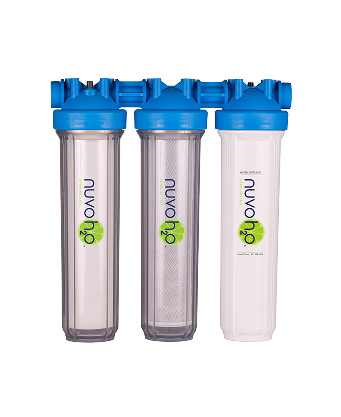
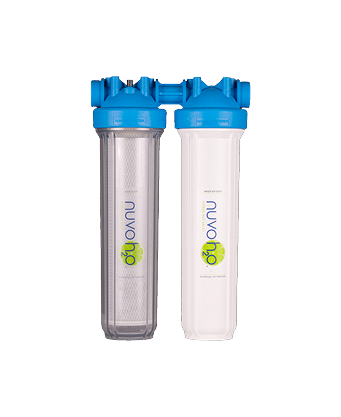
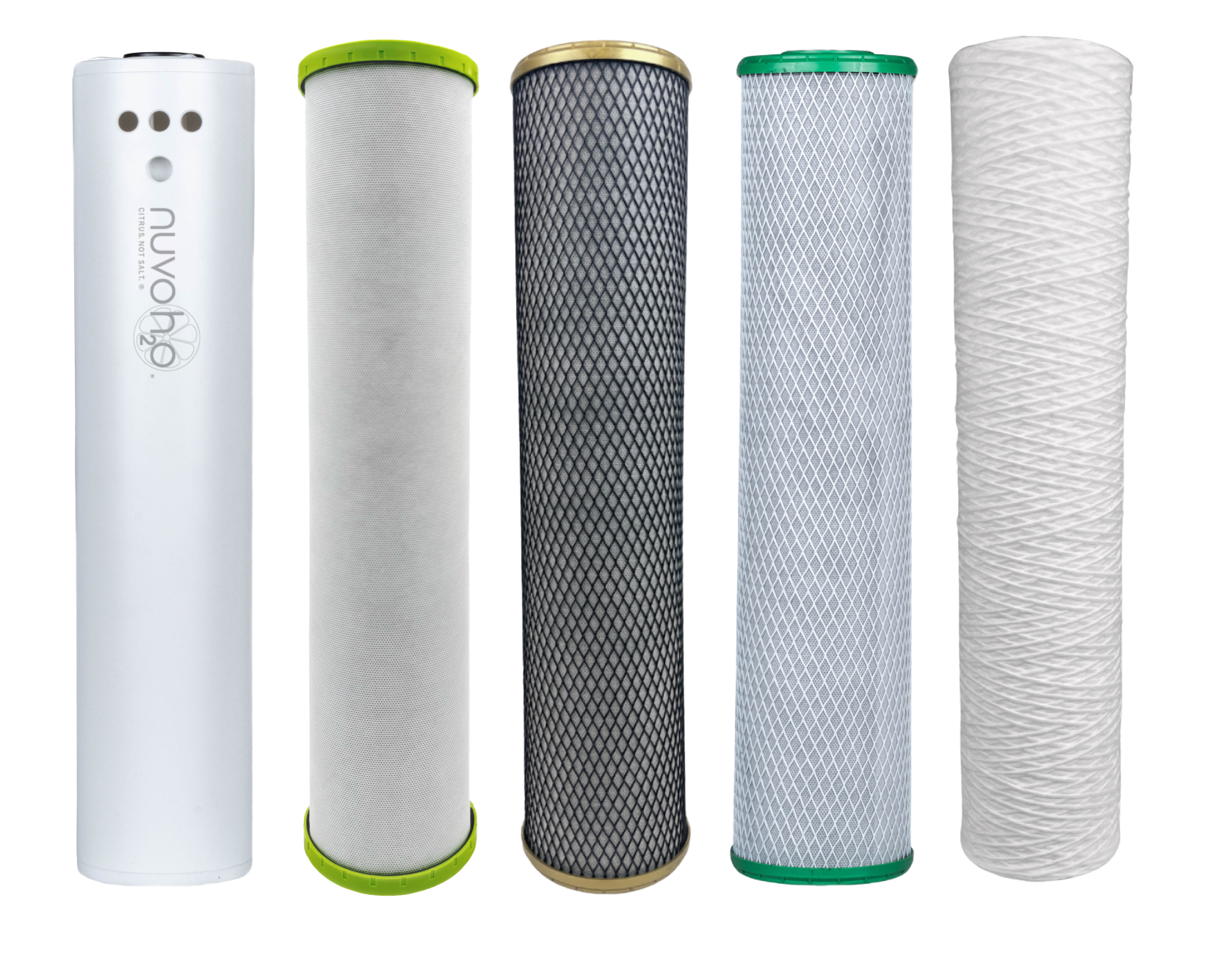
This includes systems like the NuvoH20 NuvoLuxe Pro, which target PFAS, microplastics, bacteria, and TSS without stripping minerals or producing wastewater.
Why these systems are different: Instead of relying on a single technology, they layer multiple stages of protection to target PFAS, microplastics, bacteria, and total suspended solids.
A system like NuvoLuxe Pro uses:
- pH balancing: Helps preserve the natural minerals your body needs while improving taste and helping water feel cleaner and smoother.
- PFAS-specific filtration: A dedicated cartridge that targets PFOS/PFOA and other forever chemicals that standard filters miss.
- Sub-micron or nano-rated purification: This captures bacteria, viruses, microplastics, and even nanoplastics—contaminants far smaller than what a typical household filter can handle.
The result: You get the benefits of PFAS removal, microplastic removal, and advanced purification with none of the RO trade-offs. That makes it one of the best water filtration systems for home setups if you want strong performance with minimal maintenance and zero wastewater.
ZeroWater vs Brita for PFAS Removal
A common comparison people search for is Zero Water vs Brita. Here’s the quick answer:
- ZeroWater: Uses ion exchange and often performs better with PFAS, but performance varies by model and filter age.
- Brita: Most Brita pitchers are not certified for PFAS removal. If you’re wondering, does Brita filter PFAS?, the direct answer is not reliably unless it’s a specialty certified model (most are not).
If you want the best water filter pitcher with reliable PFAS performance, look for one explicitly tested for PFAS reduction, not just chlorine or taste improvements.
A Look at a Modern PFAS Filter: NuvoH20 NuvoLuxe Pro
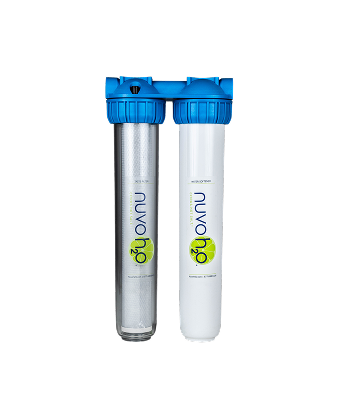
While standard PFAS filters often force you to choose between purity and healthy minerals, the NuvoLuxe Pro Under-Sink Advanced Water Purification + Fortification System approaches the problem differently.
What Makes It a Non-Toxic Water Filter for PFAS & Microplastics?
1. pH Balance Cartridge
- Keeps water naturally balanced
- Fortifies with healthy minerals instead of stripping them away
2. Premium PFOS Filter
- Targets PFAS, microplastics, and taste/odor contaminants
3. NUVO Ultra-90 Filter
- Military-grade technology
- Removes contaminants as small as 0.005 micron
- Captures microplastics, nanoplastics, bacteria, and viruses
Why It Stands Out
- Salt-free
- Zero wastewater
- No electricity
- Preserves beneficial minerals
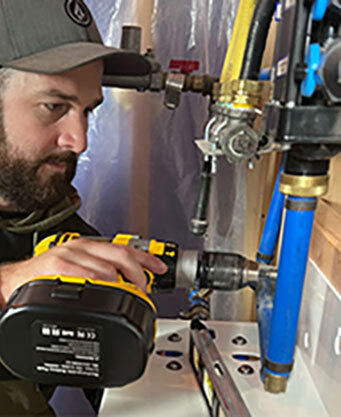
- Fits compactly under the sink
- Provides EPA-quality drinking water without RO’s drawbacks
For homeowners seeking the best water filtration system for home, especially one that handles “forever chemicals”, this type of multi-stage system is a strong option.
Choosing the Best Home Water Filter for PFAS
Looking for the best home water filter for PFAS can feel overwhelming, especially when every brand claims to “remove contaminants.” But when you’re specifically targeting forever chemicals, only a few features actually matter.
Here’s how to cut through the noise and understand what to look for.
1. NSF / ANSI PFAS Certifications
When it comes to PFAS, claims don’t mean much unless they’re backed by accredited testing. That’s why NSF/ANSI certifications are the most reliable way to know whether a filter truly reduces “forever chemicals.”
The certifications to look for:
- NSF/ANSI 53: This covers carbon block or ion exchange filters proven to reduce PFAS like PFOA and PFOS. If a pitcher or under-sink system has this certification, it’s been tested specifically for forever chemical reduction.
- NSF/ANSI 58: This is the certification tied to reverse osmosis systems. RO membranes are extremely fine, making them one of the strongest options for PFAS removal.
If a filter doesn’t list one of these certifications, or vague language like “tested to reduce PFAS” appears, proceed with caution. True PFAS reduction requires real testing, not marketing language.
2. Sub-Micron or Nano Filtration
PFAS get most of the attention, but microplastics and nanoplastics are quickly becoming just as big a concern. These particles are incredibly tiny, far smaller than what a standard carbon filter can catch.
Why this matters:
- Sub-micron or nano-rated filters can capture contaminants at a much smaller scale, including microplastics, bacteria, and in some systems, even viruses.
- If you’re already upgrading your filtration for PFAS, it makes sense to choose a system that also protects you from the next wave of contaminants.
This is one of the reasons multi-stage systems and newer technologies are becoming popular, because they’re designed for modern water challenges, not just chlorine and sediment.
3. Flow Rate & Convenience
No matter how strong a filter is, it won’t help much if it slows your life down.
Here’s how the main options compare:
- Pitchers: Easy to use and budget-friendly, but they’re slow. If your household goes through a lot of water, constantly refilling a pitcher can get old fast.
- Under-sink systems: These provide faster flow, higher capacity, and more consistent performance. They’re typically the best long-term solution if you want convenience without sacrificing filtration quality.
Think about your daily habits. Do you want water ready on demand, or are you okay with a slower, manual process?
4. Wastewater
This is an overlooked factor, but it matters for both practicality and sustainability.
- Reverse Osmosis: For every gallon of purified water, most RO systems send about a gallon of wastewater down the drain. If you’re environmentally conscious (or on a tight water budget), this can be a drawback.
- Advanced multi-stage systems: Newer technologies can remove PFAS and microplastics without producing wastewater, making them a more efficient option for everyday use.
If you’re weighing RO vs. an RO alternative, this is one of the biggest differences.
5. Mineral Retention
Not all filtration systems treat your water the same way. Some purify so aggressively that they remove minerals your body actually needs, like calcium and magnesium.
Why this matters:
- Water that’s completely stripped of minerals can taste flat or acidic.
- Some research suggests that mineral-rich drinking water supports overall hydration and long-term health.
- Systems that filter contaminants without stripping minerals give you clean water that still tastes natural and supports your body’s needs.
If you prefer water that tastes clean but still feels “alive,” look for a system designed to preserve essential minerals.
Best Water Filters That Remove PFAS (Quick List)
- Under-sink RO systems (NSF/ANSI 58 certified)
- Advanced multi-stage under-sink systems like NuvoH20
- Certified carbon block pitchers
- Ion exchange pitcher systems
Avoid:
- Standard Brita-style pitchers
- Basic fridge filters
- Whole-house carbon systems that are not tested for PFAS
Ready for Safer, Cleaner Water?
If you’ve made it this far, you already know PFAS, microplastics, and other “forever chemicals” aren’t something you solve with a basic pitcher or a generic fridge filter. Getting them out of your water takes the right technology; filtration that’s actually tested, certified, and designed to catch contaminants small enough to slip through most systems.
If you’re ready to make sure the water in your home is truly safe for drinking, cooking, and daily use, take a closer look at your filtration setup and choose a system built for today’s most prevalent contaminants. Your water matters, and so does what’s in it

FAQ: PFAS, Water Filters & Home Safety
Do Water Filters Really Remove PFAS?
Yes, but only filters engineered and tested for PFAS reduction, typically NSF/ANSI 53 or 58 certified systems, or advanced multi-stage filters with PFAS-specific media.
Is Reverse Osmosis the Only Way to Remove PFAS?
No. Ion exchange and high-performance carbon block filters, as well as multi-stage systems like NuvoH20, can also reduce PFAS effectively.
Does Reverse Osmosis Remove PFAS?
Yes, RO systems are one of the most reliable methods for PFAS removal, but they waste water and strip minerals.
Does Brita Filter PFAS?
Most Brita filters do not remove PFAS. They focus mainly on chlorine taste and odor unless explicitly certified otherwise.
What’s the Best Water Filter for PFAS?
Under-sink systems with PFAS-specific filtration, preferably certified or independently tested, offer the most consistent protection.
What’s the Best Water Filter Pitcher for PFAS?
Look for pitchers with carbon block + ion exchange media and explicit PFAS reduction claims. Basic carbon pitchers won’t cut it.
What’s the Best Water Filtration System for Home PFAS Protection?
A multi-stage under-sink system designed for PFAS, microplastic, and nano-level filtration is the most robust option for daily drinking and cooking water.
Are Non-Toxic Water Filters Better for PFAS?
Yes. Systems that avoid salt, waste water, and plastic leaching while providing micro- and nano-level filtration are ideal for long-term use.